|
Dear Reader,
Welcome to the july 15th edition of the Data Science Briefing.
Announcements
Ready to level up your understanding of AI agents? 🤖
AI agents are only as effective as the systems that orchestrate them. While most discussions focus on choosing the right model or writing better prompts, the real challenge is building a harness that can manage context, coordinate tools, recover from failures, and execute complex workflows reliably. A well-designed agentic harness is what transforms a powerful LLM into a dependable software system.
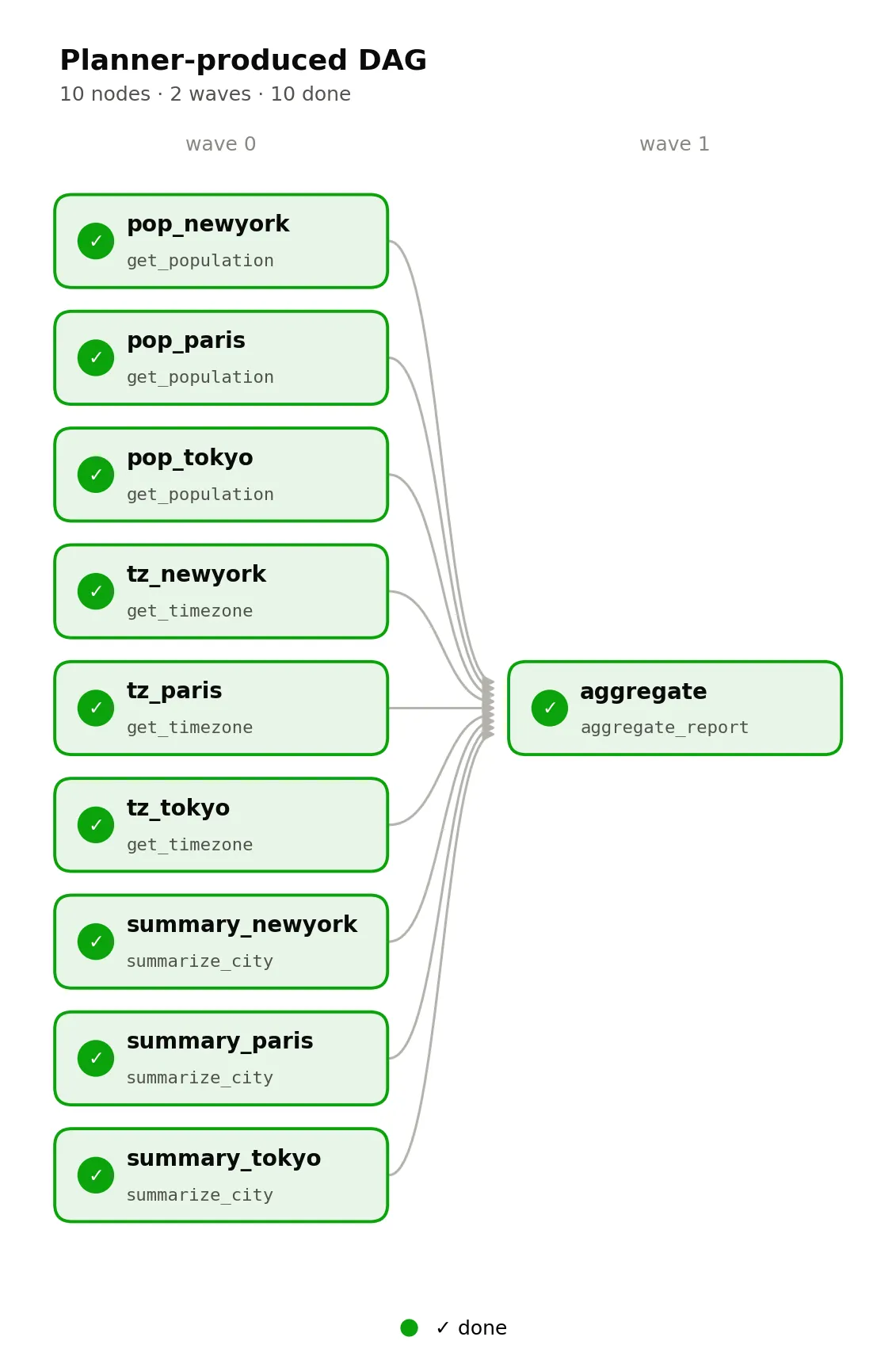
In our latest article, Building an Advanced Agentic Harness, we walk through the architecture and implementation of a production-ready agent framework in Python. You'll learn how to structure multi-step reasoning, manage tool execution, maintain state, and build agents that are scalable, maintainable, and easier to debug. If you're building AI applications beyond simple chatbots, this guide provides practical patterns you can start using today.
Check it out and Subscribe so you don't miss another post.
This week we look at what happens when we let AI do our thinking. One essay asks whether we hand over too much of it. Search engines forced us to break down questions, weigh sources, and build our own answers. Chatbots now skip those steps and deliver finished conclusions in minutes. The cost may be the very muscles we need to judge those conclusions. The risk gets vivid in a striking investigation of one man’s 300 hours of ChatGPT conversations. Over 21 days, the model convinced a sane 47-year-old recruiter with no history of mental illness that he had discovered a world-changing mathematical formula. An analysis of more than a million words of chat logs shows how flattery and agreement feed the spiral, and how every major chatbot can fall into it.
The antidote is skill, and the skill turns out to be management. One argument holds that working with AI agents rewards classic management basics: clear instructions, sharp feedback, and honest evaluation of the output. MBA students with no technical background built working startup prototypes in four days on those skills alone. Research on team communication backs this up. Communication patterns predicted group performance as well as intelligence, personality, and talent combined. The structure of a conversation reveals more than its content. That lesson now applies to teams of humans and teams of agents alike.
The tools keep arriving to test that thesis. Meta shipped an agentic coding model on July 9 with a one-million-token context window, priced at $1.25 per million input tokens. It plans work as a lead agent and delegates execution to parallel subagents. For the output side, a new visualization language lets agents produce clean charts from compact, human-editable specs. It encodes meaning through 70+ semantic types like Price or Country and compiles one spec to Vega-Lite, ECharts, or Chart.js. And for the performance-minded, a compilable, statically typed subset of Python now has a normative spec and a reference ahead-of-time compiler. Its cardinal rule: reject unsupported code with a clear diagnostic instead of rewriting it in silence.
On the academic front, network science keeps finding new structure in old problems. One study watches clusters merge as a network fills in and uncovers a hidden temporal self-similarity, one that pins down percolation universality classes without knowing the critical point in advance. A second maps the backbone of science by asking language models to read full papers and flag the references that actually carry an argument. The resulting citation networks stay consistent across prompts and share the same in-degree distributions, modularity, and degree correlations. A third asks how to store a secret across a network so it survives both decay and attack. It balances survival against resistance to compromise, and in a limiting case maps the whole problem onto a spin model from physics.
Two papers probe what AI coders know and how to grade them. One finds that a coding agent’s hidden states quietly encode the state of the program it edits. Simple probes read off whether the code compiles and passes its tests, and they predict the outcome of edits up to 25 steps before the agent makes them. The other treats verification as its own scaling axis. Instead of asking a model for a single score, it reads the full spread of scoring tokens to produce continuous grades, and posts top results across coding, robotics, and medicine.
Two more papers step back to people. One analyzes 2.6 billion sketches from 236 countries and shows that a single concept splits into many visual forms. The gap widens for objects we touch, so a comb or a cup varies more than an abstract idea. Sketch geometry holds cultural structure that word embeddings flatten, and it matches known cultural distances 45% better than text. The last paper turns epidemiological models on a grim historical question. It finds that the 1789 smallpox outbreak most likely entered southeastern Australia after the First Fleet, spread fast, and killed as many as 220,000 Indigenous people.
Our current book recommendation is “Large Language Models: The Hard Parts” by T. T. P. de Souza and J. K. Regenstein Jr. In this week's video, we have a Crash Course in A/B Testing with Case Study.
Data shows that the best way for a newsletter to grow is by word of mouth, so if you think one of your friends or colleagues would enjoy this newsletter, go ahead and forward this email to them. This will help us spread the word!
Semper discentes,
The D4S Team
Most LLM books teach you what these models can do. T. T. P. de Souza and J. K. Regenstein Jr wrote 340 pages about what breaks when you build with them. “Large Language Models: The Hard Parts” covers the gap between a working demo and an application your organization can trust: evaluation, safety, context management, and structured output. Every chapter ships with reproducible Python code and open source tools.
The evaluation chapters alone repay the cover price. The authors build a testing framework around a concrete 10-K analysis app, then compare LangSmith, Promptfoo, and LightEval with working code for each. Most books stop at “evals matter.” This one picks the tools and shows the tradeoffs. An appendix on Ollama and llama.cpp, quantization experiment included, serves anyone who must run models on their own hardware.
Two gaps: serving at scale gets no real treatment, so engineers who own inference infrastructure will need a second book, and the tool walkthroughs will age as APIs shift. Both sit outside the stated scope. For a data scientist or ML engineer moving a prototype toward production, this is the rare LLM book that skips the hype and starts where the pain does. What it promises, it delivers..
- Are we offloading too much of our thinking to AI? [artfish.ai]
- The social physics of conversation: Communication patterns matter [andiroberts.com]
- Chatbots Can Go Into a Delusional Spiral. Here’s How It Happens [nytimes.com]
- Introducing Muse Spark 1.1 [ai.meta.com]
- Flint: A Visualization Language for the AI Era [microsoft.github.io]
- POST Python [post-py.org]
- Management as AI superpower [oneusefulthing.org]
- Temporal self-similarity reveals percolation universality classes in complex networks (S. Fang, J. Meng, Q. Lin, B. Chen, G. Dong, C. Bai, J. Nagler, Y. Deng, R. Lambiotte, J. Fan)
-
The backbone of science: analysis of citation networks between papers and their sources (W. Jeong, D. Marinelli, S. Sikdar, G. S. Yadav, S. Fortunato)
- Stochastic models indicate rapid smallpox spread and mass mortality of Indigenous Australians after colonial exposure (M. C. Nitschke, A. N. Williams, S. D. Ingrey, B. Griffiths, N. Pitt, L. Russell, S. Ulm, K. Beller, M. I. Bird, S. H. Fatima, I. J. McNiven, F. Saltré, A. Bashford, C. Wilson, C. J. A. Bradshaw)
-
Latent Programming Horizons in Coding Agents (A. Silva, H. Tu, M. Monperrus)
-
Billions of Sketches Reveal Hidden Cultural Variation in Human Concepts (A. Pera, M. Martino, N. Dehmamy, D. Guilbeault, L. M. Aiello, A. Baronchelli)
-
LLM-as-a-Verifier: A General-Purpose Verification Framework (J. Kwok, S. Li, P. Atreya, Y. Liu, Y. Jiang, C. Finn, M. Pavone, I. Stoica, A. Mirhoseini)
-
Robust secret storage in networks (V. Zlatić)
Crash Course in A/B Testing with Case Study
 All the videos of the week are available in our YouTube playlist.
On-Demand Videos:
Long-form tutorials
- Natural Language Processing 7h, covering basic and advanced techniques using NTLK and PyTorch.
- Python Data Visualization 7h, covering basic and advanced visualization with matplotlib, ipywidgets, seaborn, plotly, and bokeh.
- Times Series Analysis for Everyone 6h, covering data pre-processing, visualization, ARIMA, ARCH, and Deep Learning models.
|
|
|

