|
Aug 26th

Dear Reader,
Welcome to the 333rd edition of the Data Science Briefing.
Announcements
Want to know how AI agents actually interact with external databases and tools via MCP? 🛠️
Check out this step-by-step breakdown by Bruno Gonçalves on building a custom Model Context Protocol (MCP) server from scratch using only the Python standard library (raw JSON-RPC over stdio).
Perfect for engineers wanting a clear, zero-dependency look at protocol mechanics before relying on higher-level SDKs.
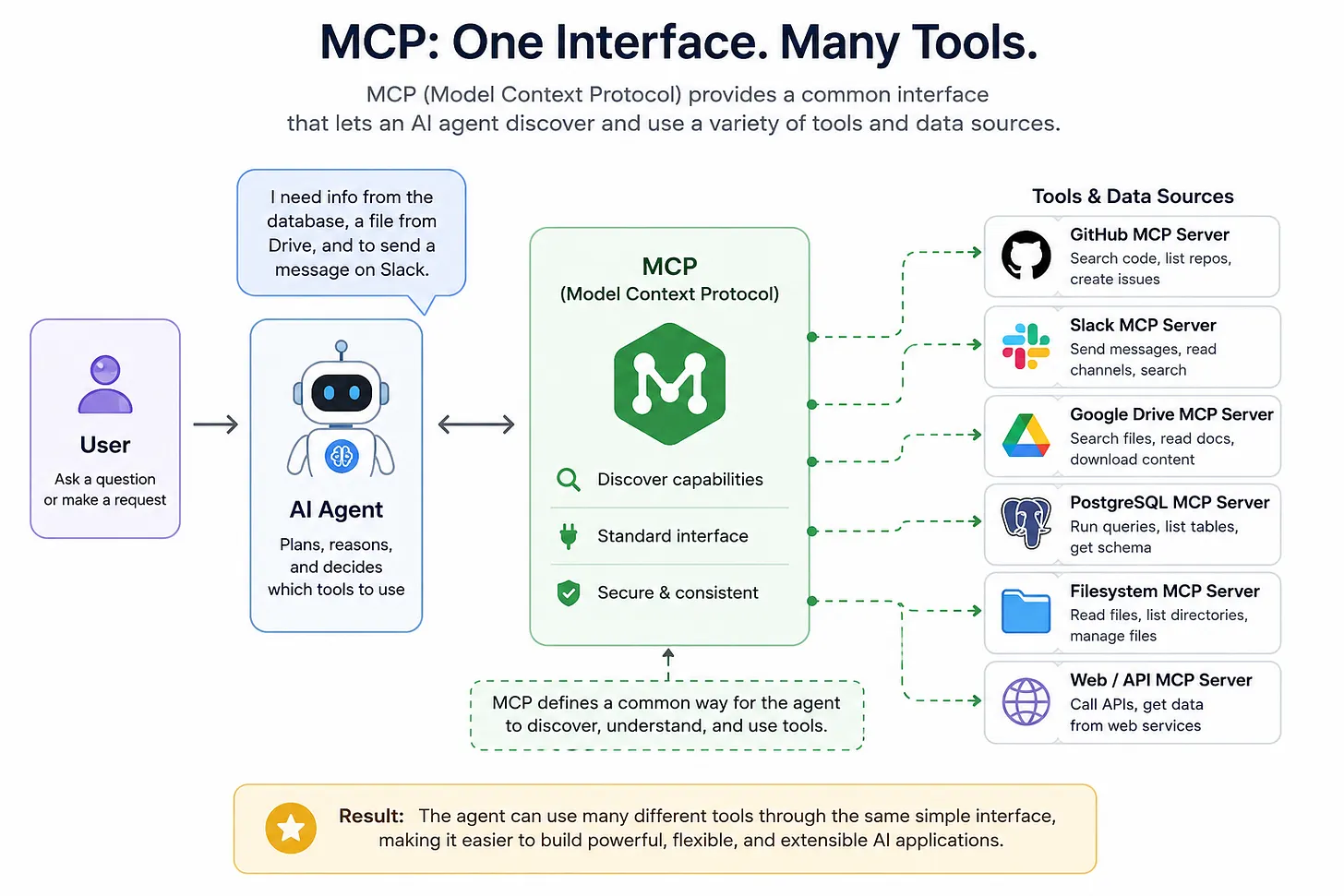
Check it out and Subscribe so you don't miss another post.
This week we're proud to announce our latest academic paper where we take another look at the argument about how far people travel. Displacement distributions carry heavy tails, and the argument over whether they are power laws born of individual Lévy flights or if each person moves log-normally, and the power law appears after you mix containers of different sizes. The COVID lockdowns removed long trips and left local ones intact, constituing a natural experiment that helps to distinguish the two scenarios.
On our regular content, we start by focusing on local models. The most popular local model runner rides on llama.cpp, and one long post argues the wrapper has stopped earning its keep. Ollama’s README skipped any credit to its engine for more than a year, and a license-compliance issue sat unanswered for over 400 days. In mid-2025 the project swapped llama.cpp for its own engine on ggml, and old bugs in structured output and vision models came back. Community benchmarks put llama.cpp at 161 tokens per second against 89 for Ollama on the same hardware. The protocol layer moved the same week. The MCP maintainers published a new roadmap on August 22. The July 28 release had already dropped protocol-level sessions and the initialization handshake, so a remote server now scales like any other HTTP workload. The next read asks what happens once those agents share a machine. A red-team study put swarms of Claude agents in shared environments and catalogued the failures. A swarm of 45 agents found 266 vulnerabilities across 15 open-source projects on 27 million tokens. The same agents working alone found 21 on 6.5 million, and only 12 finds overlapped. The practical half of the link roll opens with 20,000 New York apartments. The data series moves from algorithms to a public Airbnb snapshot: 20,000 rows sampled from about 40,000, and 29 columns. Another post trades exact answers for fast ones. It builds a 12-airport tour on the world flight network, 3,425 airports and 19,256 routes after cleaning, with a mean pairwise distance of 9,600 kilometers. Claude’s new text watermark works at the moment of word choice. Several next words often fit equally well. A secret key and the few preceding words then settle the pick. The pattern is invisible to readers and testable with the key. So do people even want machine-made work? A journal study found readers preferred generated poems to Shakespeare, Eliot, and Dickinson, and the researchers credit the win to plainer, more accessible writing. The essay’s claim: generated art is designed to please, not to provoke, so it comes out as kitsch, and most people prefer kitsch. Judging art by revealed preference, it warns, means taking the safest and least surprising path every time. That is what the models do.
On the academic front, we start with a short paper bringing some scrutiny to evaluation scores. Treat each eval as a sample from a larger population of questions, and report a standard error beside every score. Questions that share a passage or a source language are not independent, and clustered errors run up to 3.05 times the naive ones. What a model writes about its own reasoning needs checking too. A study of 4,834 question pairs asked models whether X is bigger than Y, then whether Y is bigger than X. Some models argued their way to Yes on both, or No on both, with tidy reasoning each time. The watermark story from the Links section has a source paper, and it ran the largest test of its kind. The method seeds a tournament among candidate tokens with a hash of the previous four tokens and a secret key. It changes only the sampling step, so detection needs no model. A live trial on nearly 20 million chatbot responses moved the thumbs-up rate by 0.01 percent and the thumbs-down rate by 0.02 percent. Paraphrasing weakens the mark, low-entropy text hides it, and open-weight models sit outside its reach.
The second half watches the machines write, ask, replicate, and prove. A new open-weight model drops the one-token-at-a-time habit. It refines blocks of 256 tokens in parallel by discrete diffusion, and it started life as a 25.2-billion-parameter mixture-of-experts model with 3.8 billion active. Fine-tuning used under 10 percent of the original training budget. Agents fill gaps in a request with a default guess or a clarifying question, and a new framework treats that choice as active inference. The agent keeps a belief over the hidden task state and picks the next question, action, or stop to minimize expected free energy under a token cost. Replication is the next step up. One team built Replica, 310 figure-replication tasks drawn from 100 machine learning and AI-for-science papers.
So what do mathematicians want after proofs turn cheap? The closing essay, based on a lecture at the 2026 International Congress of Mathematicians, sets capability aside and asks about values. An independent test in May 2026 saw models solve seven of ten research-level problems for tens to hundreds of dollars each. The essay predicts proof abundance: proofs will pile up faster than anyone can verify them, and verified proofs faster than anyone can write them up. Institutions built for scarcity will strain under abundance. The advice cuts against prizes and priority. Disclose the tools, keep credit and responsibility with humans, and value exposition and refereeing over being first. A proof no human can explain stays incomplete, formal verification or not.
Our latest book recommendation is "Competing in the Age of AI" by M. Iansiti and K. R. Lakhani. In this week's video, we have a conversation with Jeff Dean on The 1% Rule for Building in AI.
Data shows that the best way for a newsletter to grow is by word of mouth, so if you think one of your friends or colleagues would enjoy this newsletter, go ahead and forward this email to them. This will help us spread the word!
Semper discentes,
The D4S Team
"Competing in the Age of AI" makes a direct argument: AI is not just a tool for speeding up work; it changes how companies learn, decide, and grow. Marco Iansiti and Karim R. Lakhani’s “AI factory” idea explains why data feedback loops and network effects can give digital firms a lasting edge.
For data scientists and machine learning engineers, the book’s value is its business lens. It shows why a strong model means little without data access, product integration, and leadership support. The tradeoff is that it stays high-level: there is little on MLOps, data quality, drift, evaluation, or the hard work of shipping reliable systems. Its focus on large platform companies can also feel distant from smaller or regulated teams.
Even so, the book is a sharp guide to the forces surrounding technical work. It will not teach you how to deploy a model, but it may help you understand why certain AI efforts take hold while others fade after the demo.
- Friends Don't Let Friends Use Ollama [sleepingrobots.com]
- The New MCP Roadmap [blog.modelcontextprotocol.io]
- Cleaning and shaping the Airbnb listings [stochastic.blog]
- People prefer A.I. art because people prefer bad art [maxread.substack.com]
- Prediction Market Cheating Gets Creative [wsj.com]
- Hard problems and heuristic answers [stochastic.blog]
- Patterns and problems in multiagent systems [anthropic.com]
- How Claude's text watermarking works [anthropic.com]
- The power law in human mobility is a mixture artifact: evidence from a pandemic natural experiment (L. Ferres, B. Gonçalves)
-
Active Inference as Context Acquisition for AI Agents (S. Dutta, S. N. Ramachandran, S. Sra)
- DiffusionGemma Technical Report (DiffusionGemma Team)
-
Chain-of-Thought Reasoning In The Wild Is Not Always Faithful (I. Arcuschin, J. Janiak, R. Krzyzanowski, S. Rajamanoharan, N. Nanda, A. Conmy)
-
Mathematics in the age of AI (T. Tao)
-
Adding Error Bars to Evals: A Statistical Approach to Language Model Evaluations (E. Miller)
- Scalable watermarking for identifying large language model outputs (S. Dathathri, A. See, S. Ghaisas, P. Huang, R. McAdam, J. Welbl, V. Bachani, A. Kaskasoli, R. Stanforth, T. Matejovicova, J. Hayes, N. Vyas, M. A. Merey, J. Brown-Cohen, R. Bunel, B. Balle, T. Cemgil, Z. Ahmed, K. Stacpoole, I. Shumailov, C. Baetu, S. Gowal, D. Hassabis, P. Kohli)
-
Training AI Scientists to Replicate Research (D. Falck, S. Sabri, A. Surina, T. Foster, A. Sims, S. Devlin, D. Rogers, T. Collins, K. Aleksiev, L. Kirsch, E. Hughes)
How Claude's Text Watermarking Works
 All the videos of the week are available in our YouTube playlist.
Upcoming Events:
Opportunities to learn from us.
Checkout the events page for more details.
On-Demand Videos:
Long-form tutorials
- Natural Language Processing 7h, covering basic and advanced techniques using NTLK and PyTorch.
- Python Data Visualization 7h, covering basic and advanced visualization with matplotlib, ipywidgets, seaborn, plotly, and bokeh.
- Times Series Analysis for Everyone 6h, covering data pre-processing, visualization, ARIMA, ARCH, and Deep Learning models.
|
|
|


